


Provisional take home notice template
Provisional take home notice template
Many voters are unfamiliar with provisional voting and may feel unsure if their ballot will count. Take-home notices help provisional voters make sense of what happened and make the next steps clear and easy to follow.
A good take-home notice reduces uncertainty. It gives voters a clear, trustworthy reference they can review after leaving the polling place without needing to remember everything they were told.
Effective take-home notices help provisional voters understand:
- why they voted provisionally
- what happens after they leave the polling place
- what actions they may need to take
- where to find additional information
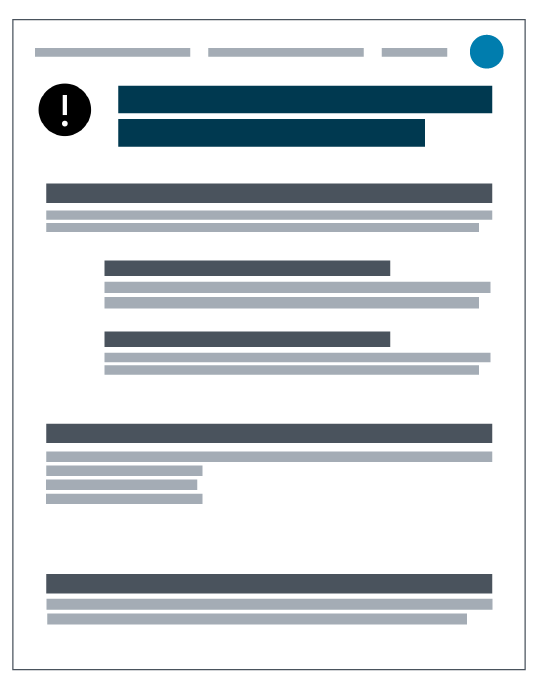
Provisional take home notice template
Design tips for creating effective take home notices
These are our main tips we recommend to write an effective take home notice.
Present information in the order voters need it
Don’t make voters read through background information to find out what to do. Start with explaining why the voter needed to vote provisionally and what they need to do next.
Present information in the order voters need it:
- Why did you vote provisionally today?
- Do you need to take action?
- How can you check your status?
- Where can you get help?
This creates a clear path through the information without requiring voters to read the entire notice at once.
Make important actions easy to find
Use headings, spacing, and bold text to draw attention to deadlines, required actions, and contact information. Avoid emphasizing too many things at once.
Use direct, action-oriented language
Clearly explain any actions the voter needs to take after leaving the polling place. If the voter does not need to take any next steps, make that explicit.
Make deadlines and documentation requirements clear
If voters need to take action by a deadline, make the date and required action easy to find.
Include:
- the location and hours for voters to bring their documents
- documentation requirements
- the exact deadline to bring in documents.
Use plain language
Avoid lengthy descriptions of election procedures. Write for someone who may be reading the notice for the first time, outside the polling place, without a poll worker there to explain it.
Explain what happens to the ballot
In a sentence or two, explain what happens after a provisional ballot is submitted. Avoid promising that a ballot will be counted before its eligibility has been determined.
Explain how voters can check their status
If your jurisdiction offers a way to check provisional ballot status, include the official website, phone number, or other available method. Explain what information voters may need to access their status.
How to use this tool
Print enough copies to hand out to every provisional voter. Train poll workers to complete the notice with the voter at the end of the interaction. This is also a good conversation starter in case the voters have questions about what to do next.
Editing and printing instructions
Because provisional voting varies state-by-state, you will need to edit the template to match your jurisdiction’s process. Edit all highlighted text that’s inside brackets, like the example here: [Replace your content]
This tool is designed to be printed double-sided on letter sized paper.

© 2025 Center for Civic Design