

About
We believe that democracy is a design problem.
At the Center for Civic Design we strive to make every interaction with the government easy, effective, and pleasant. We work with elections offices, democracy advocates, and civic engagement organizations to make elections easier to run, support innovation, and invite participation in elections.
From our practical experience and applied research, we share best practices for civic design and our core skills of plain language, accessibility, information design, and civic research.
Our goals
Reimagining elections. How can we reimagine ways to support democracy with effective ways to engage voters? We work with elections offices to design the official materials, forms, and processes that voters interact with so that they are more usable and engaging.
Supporting innovation. How do we innovate in elections, whether we are introducing new ways to vote or new technology? We work with partners on the frontlines of new election technologies and voting methods to ensure that our core civic skills are embedded into new innovations and policies from the start.
Inviting participation. How do we invite every eligible voter to vote and rebuild confidence in democratic elections? We collaborate with a range of nonpartisan groups to widen participation in elections, understanding how to help people take action to vote.
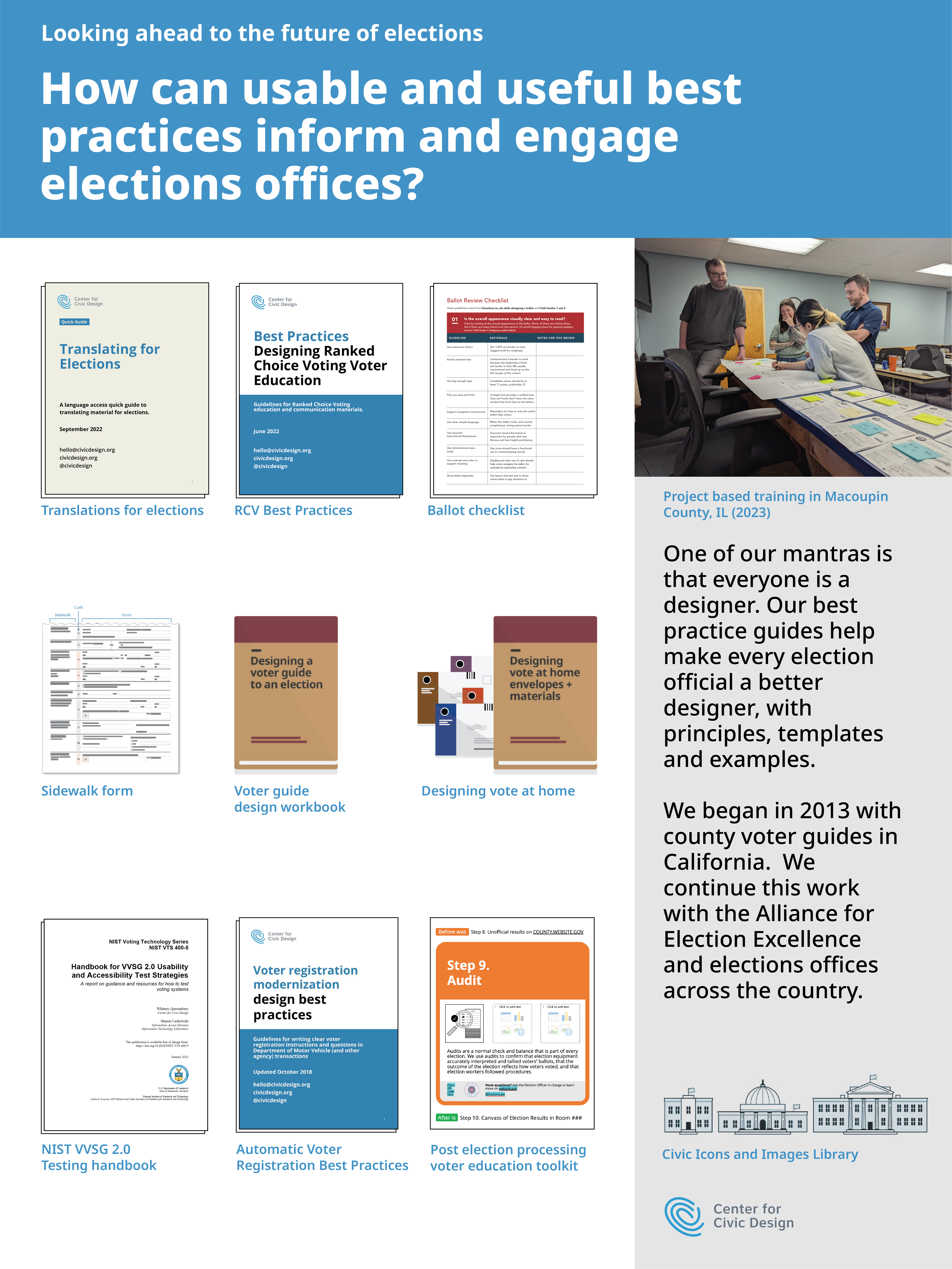
Introducing best practices. How can we create and share usable and useful best practices for informing and engaging voters? When we’re confident that we’ve arrived at a research-based best practice, we create and share usable and useful resources (templates, best practices, samples, and more) with the wider elections field.
Explore past projects related to our goals
Download briefs highlighting projects related to our 4 strategic goals.
For more information
- Key supporters and partners
- Our annual year-in-review reports
- Or explore this website with information about our core skills, research, free tools for civic design, and work on design for running elections
The Center for Civic Design is a 501(c)(3) non-profit organization, registered in Maryland. Our Federal EIN is 46-3535619.