


List maintenance notices that work
List maintenance notices that work
List maintenance mailers are a legal requirement. But whether voters recognize what they’re receiving, trust that it’s legitimate, understand what it’s asking, and actually respond is a design question.
When the Rhode Island Department of State, under Secretary of State Gregg M. Amore, needed to reach most of the state’s voters for a critical list maintenance update, they came to us for design support.
The project
The Rhode Island mailer needed to do a lot. Although the state conducts routine maintenance as voters move, change their names, or die, this would be the first comprehensive statewide update in almost 15 years.
The mailing required multiple versions personalized based on what information was missing or incomplete in each voter’s record. About a third of voters would need materials in both English and Spanish.
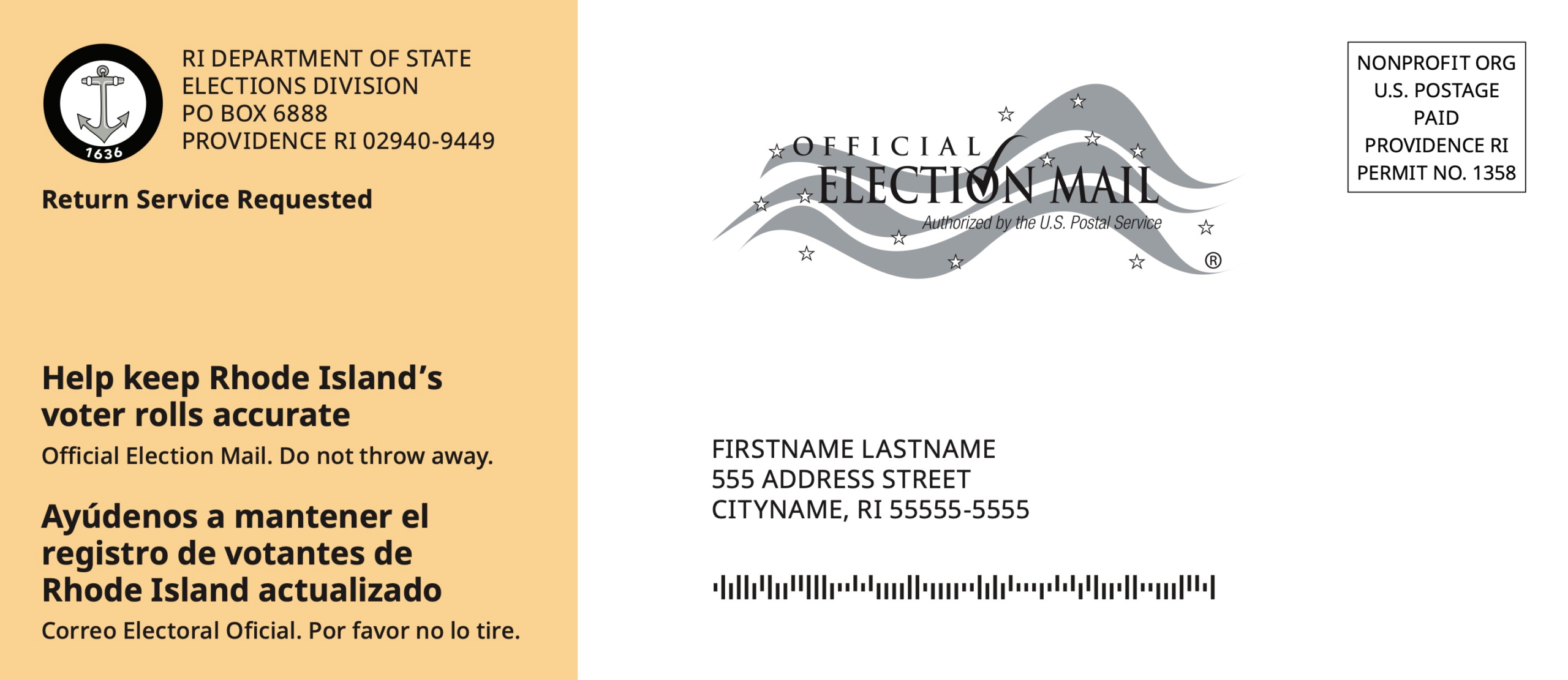
This envelope front leads with the ask in English and Spanish, “Help keep Rhode Island’s voter rolls accurate” and “Do not throw away”, framing it as civic participation rather than an administrative notice.
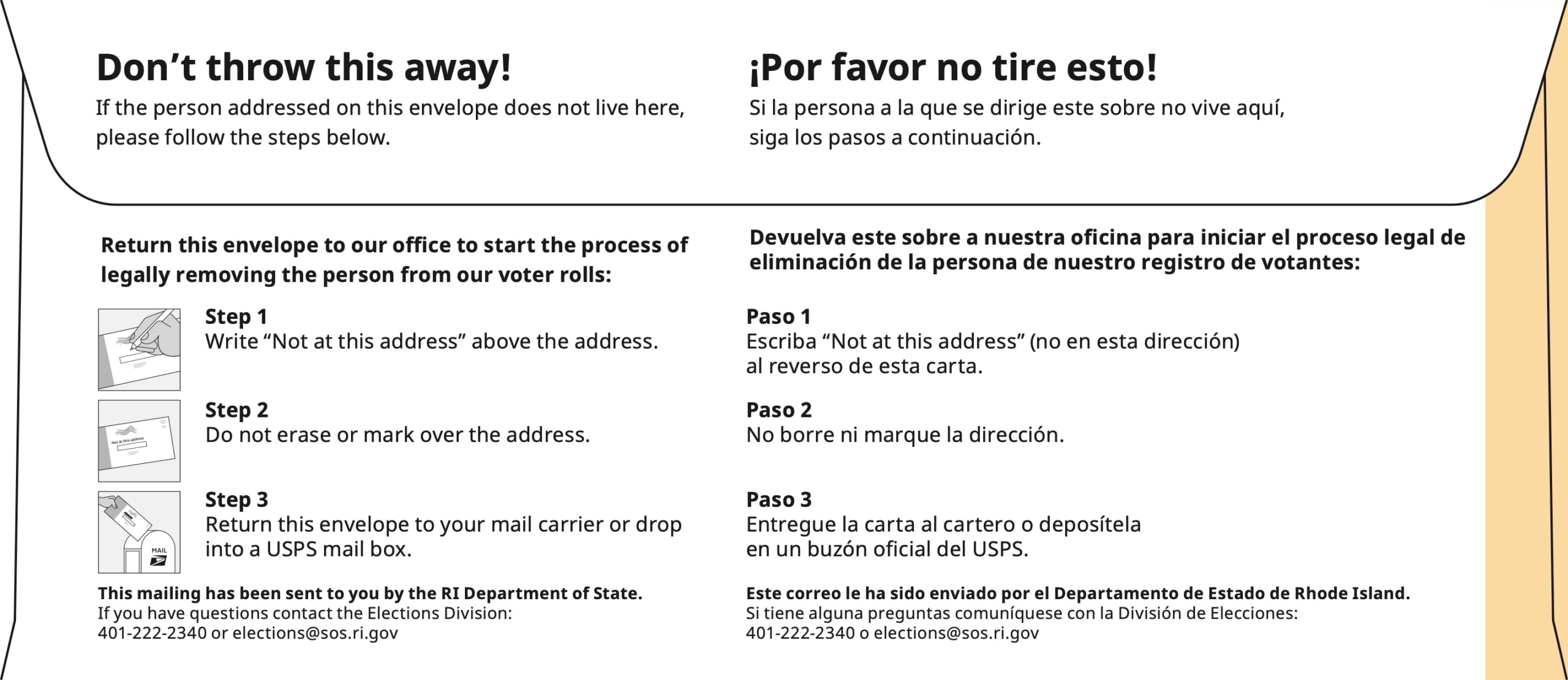
The reverse of this envelope gives clear bilingual, step-by-step instructions for non-residents, so a mailer reaching the wrong person still returns useful data to the office.
How we designed the list maintenance form
The goal we set at the start of this project was specific: ensure that voters recognize, trust, understand, and take action.
These goals shaped the design choices we made:
- Lead with what voters need to do. The envelope itself set the tone: “open today, don’t throw away” and “help us keep the rolls accurate.” Framing the ask as civic participation to help keep the rolls accurate encouraged more responses than a standard administrative notice would. It also worked for non-residents: returning the form to say “this person doesn’t live here” was positioned as a contribution rather than a chore.
- Design for every possible response, not just the one you want. A returned form with updates was the goal — but an undeliverable mailer was also useful data. So was the new resident writing “this person doesn’t live here anymore” and sending it back. The design accounted for all 3 outcomes, giving the office actionable information in every scenario.
- Prioritize online updates. The QR code on the mailer linking to the online update form made it easy for voters to do the update online before they forgot about it. When voters update online, the office doesn’t need staff hours to process the paperwork.
- Set a deadline. A clear response deadline gives voters a reason to act now rather than set the mailer aside. It’s one of the simplest ways to lift response rates on any voter contact effort.
- Include a prepaid return envelope. Sending a mailer with personal voter information — name, address, date of birth, ID number — on a returnable postcard creates a real privacy challenge. A prepaid return envelope solved that, and removed the small but real barrier of having to find a stamp.
- Support the mailing with a broader communications push. Rhode Island didn’t rely on the mailer alone. Radio coverage, press outreach, and a dedicated website page gave voters multiple ways to learn about the mailing before it arrived, what it was, why it mattered, and how to respond. When people already know something is coming, and why, they’re far less likely to treat it as junk mail and throw it away.
- Plan for non-responders from the start. The design accounted for voters who didn’t respond to the first mailing. Follow-up reminders with slightly different envelope messaging went to households that hadn’t yet responded, and each wave produced another round of updates. Building that follow-up sequence into the plan from the beginning is worth doing for any large-scale mailing.
The result
The results were overwhelmingly positive. Over 30,000 voters updated their registration by returning the form. The mailing triggered Rhode Island’s busiest week of online voter registration updates since the state launched online registration in 2016. When voters update their own record, it also significantly reduces manual processing time for the office (and avoids typos from reading their handwriting).
I cannot thank you and your team enough for your assistance with our statewide mailing. Everything went off without a hitch and we’ve been processing the returns for the last month. We clearly could not have done it without you all.
Rob Rock, Rhode Island Secretary of State, said.
Next steps
List maintenance works best when it is part of a broader communications effort: press outreach, radio, a dedicated website page, and follow-up waves to non-responders. The design challenges Rhode Island tackled aren’t unique to that state. Whether you’re running a statewide update or a targeted follow-up mailing, the core questions are the same: how do you reach voters, earn their trust, and make it easy to respond?
List maintenance mailings are not the only messages that election offices send that ask voters to respond. Our new Voter Response Mailer Toolkit starts from a basic template and guidance to help you apply the same principles to your own notices. So far, the toolkit includes:
- UOCAVA renewal template
- Cure mailer template
- Permanent VBM mailer template
We’re adding more use cases throughout 2026, including templates and other resources for voter registration list maintenance.
Explore the voter response mailer toolkit or reach out at hello@civicdesign.org with questions.
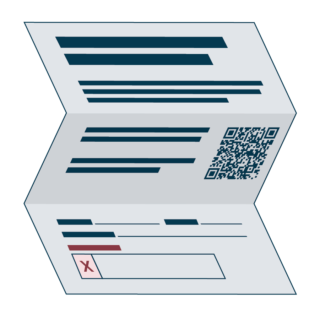
Voter response mailer toolkit
This toolkit includes templates and design guidance to make voter response mailers that are clear, actionable, and effective. We will be releasing 4 tools in Spring 2026.

© 2025 Center for Civic Design