


Permanent VBM mailer template
Permanent VBM mailer template
28 states have some kind of permanent vote by mail (VBM) list that makes it easier to vote by mail.
On a permanent mail ballot list, voters automatically receive ballots in the mail without having to request them for each election. The mailer in these states might include a checkbox saying that the voter wants to remain on the list, form fields for updating their information, and a signature space.
On a permanent application list, voters automatically receive mail ballot request forms, sometimes annually. The mailer in these states will likely include a notice and a mail ballot application form.
While each state manages and maintains these lists under their own rules, in every case, they reduce the steps needed to vote by mail.
We designed 3 templates for the different kinds of notices states send to voters about their permanent vote by mail status:
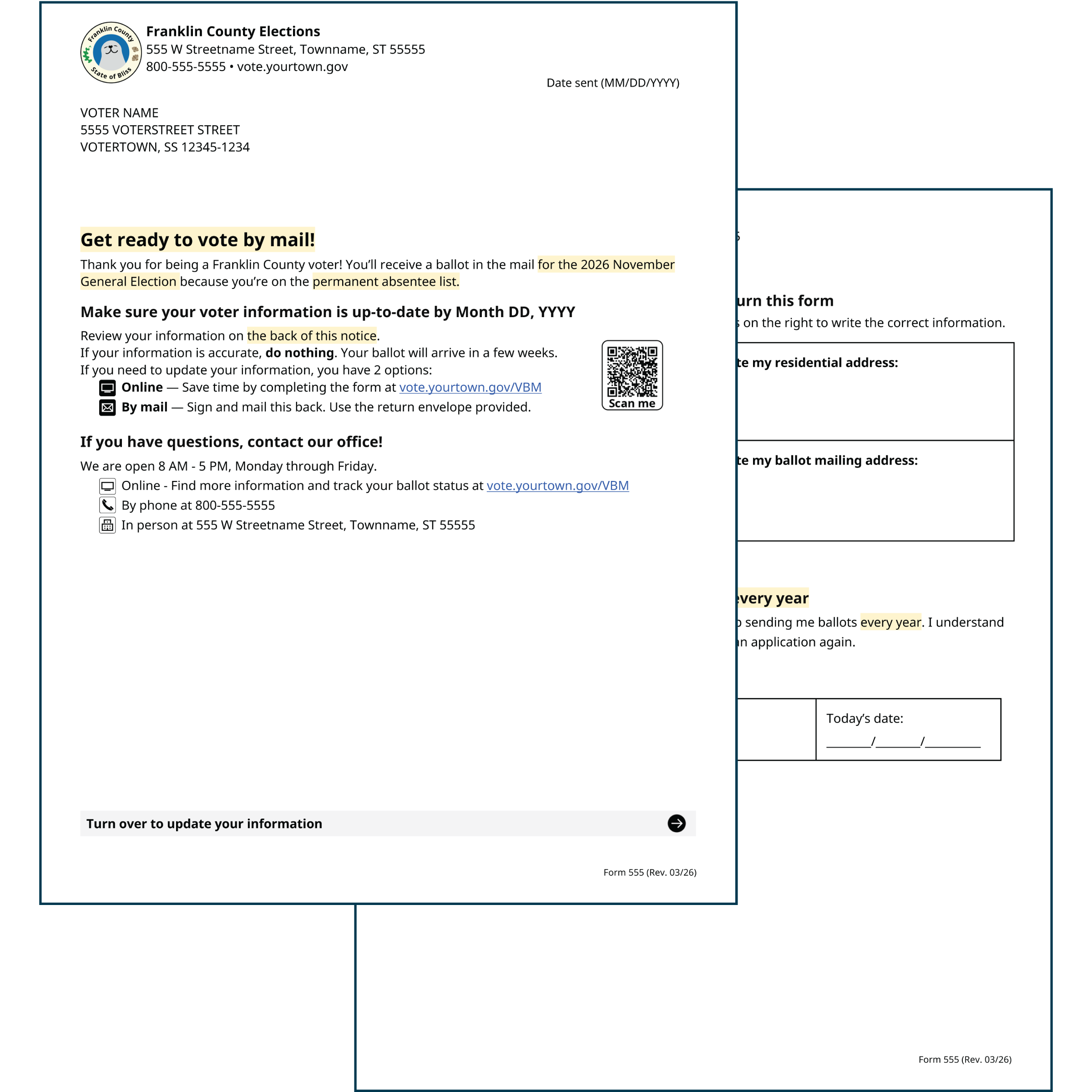
Permanent VBM Reminder
If the voter will continue to automatically receive a ballot even if they don’t respond, use this version.
Get started with the editable template below.
Or see this template as a pdf.
Download template (.docx)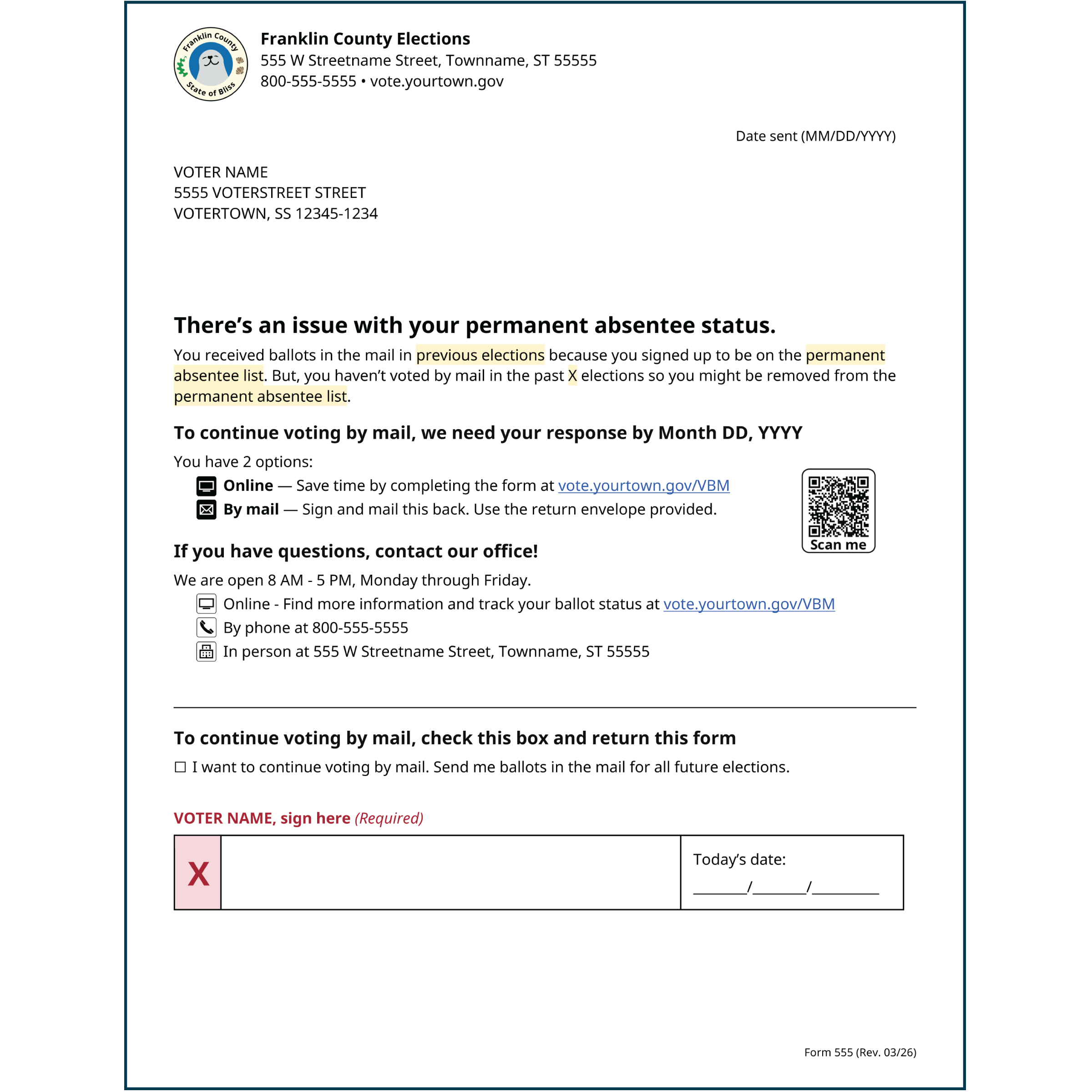
Permanent VBM Response Required
If the voter must respond to receive a ballot or stay on the list, use this version.
Get started with the editable template below.
Or see this template as a pdf.
Download template (.docx)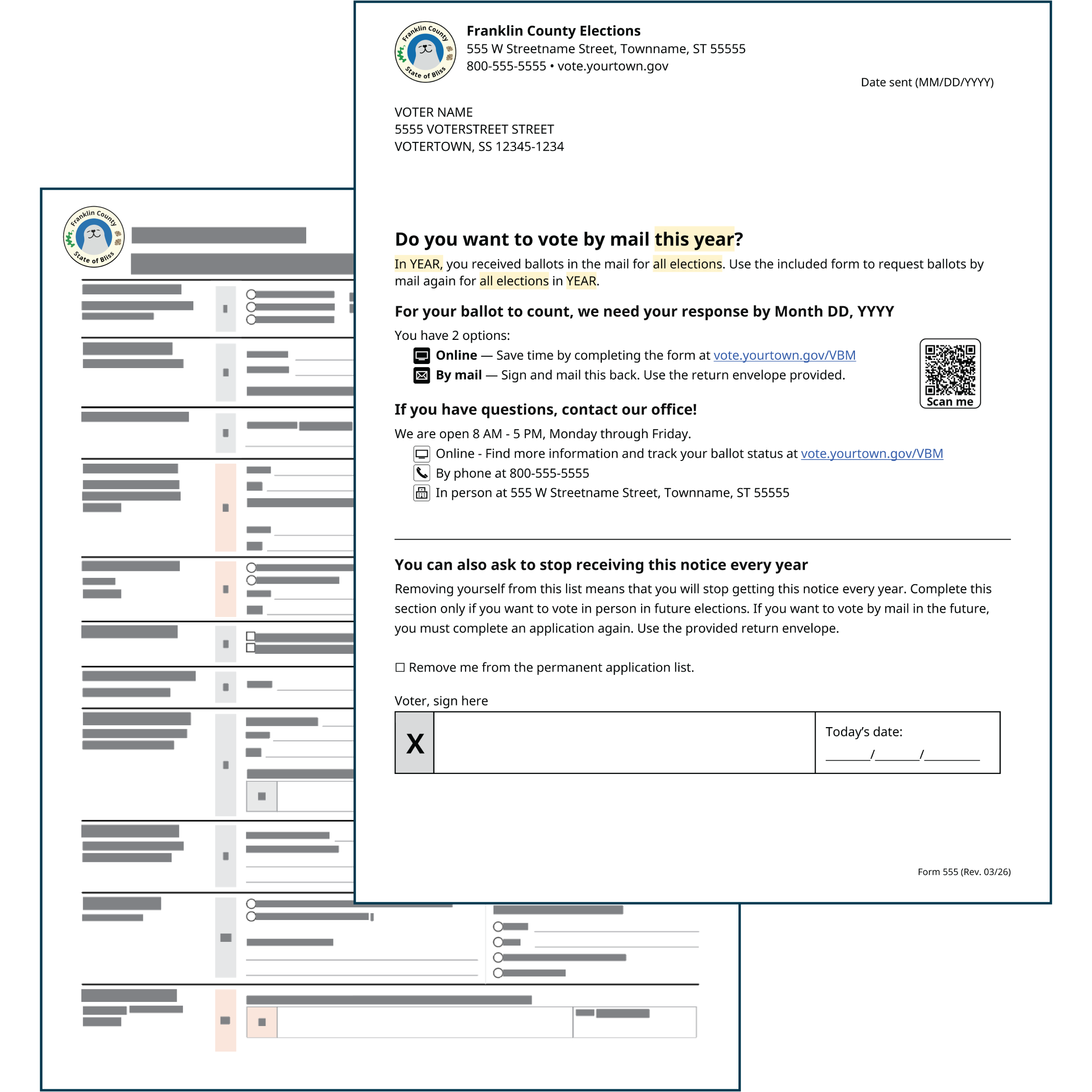
Permanent VBM Re-Application Required
If the voter must fill out an application to receive a ballot, use this version.
Get started with the editable template below.
Or see this template as a pdf.
Download template (.docx)Key elements of a Voter Response Mailer example
-
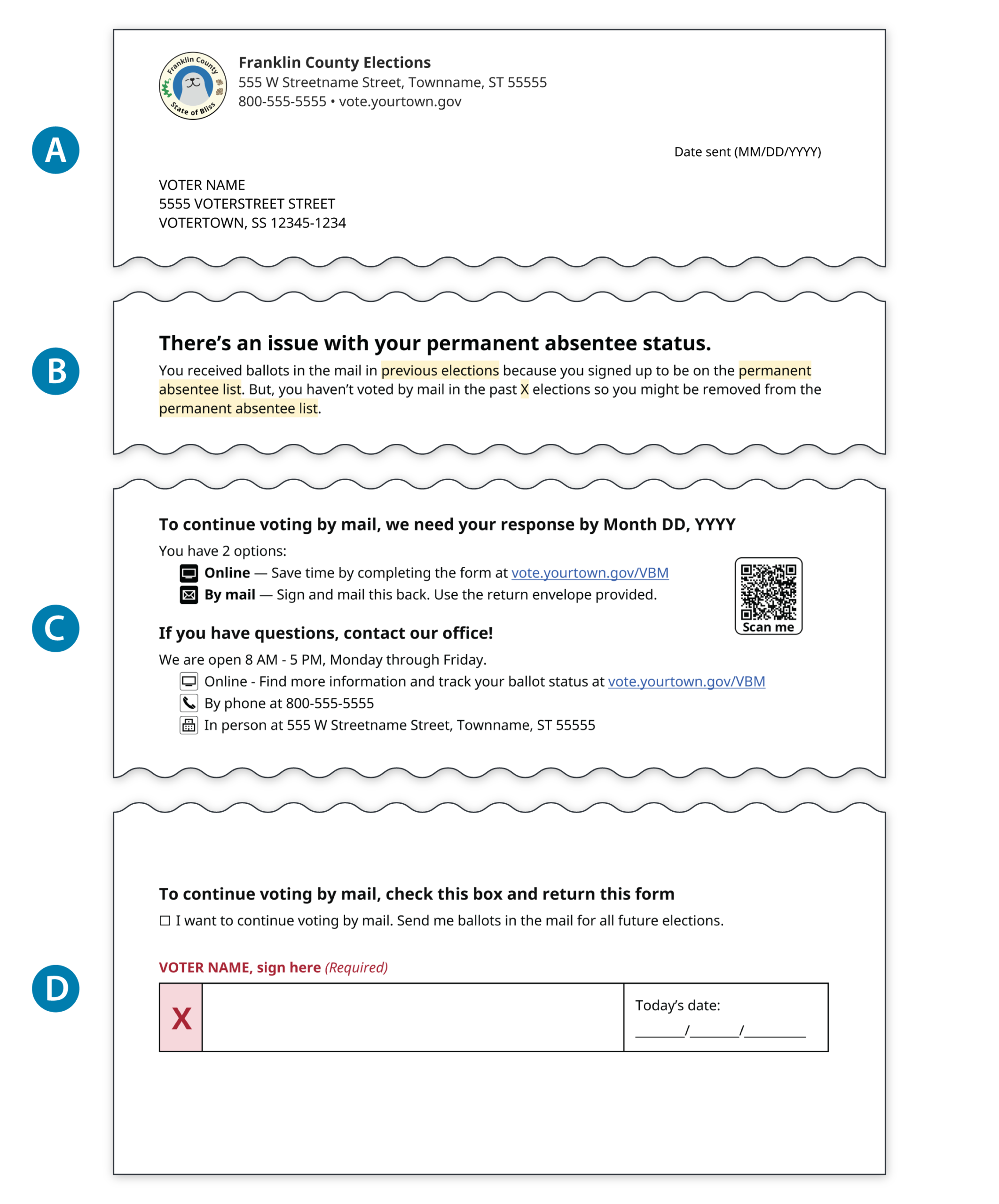
The header
Put your office logo and contact info at the top of the letter so voters recognize that this is official mail. -
The reason
Tell the voter why they’re receiving this mailer. Customize this section as accurately as possible for each voter. -
The call to action
List out the response options and deadline. Put a deadline in the heading so it stands out. List all the ways voters can reply to the notice, with details or links. Include information about how to contact your office with questions. -
The form
If the voter’s signature is required to receive their ballot or remain on the list, make this clear by using a prominent signature block.
How to write an effective permanent VBM mailer
These are our main tips we recommend to write an effective permanent VBM mailer.
Help voters understand what the notice is asking
Key question: Do voters know what to expect because they signed up to be on the list?
Voters must usually opt in to the permanent vote by mail list. This means that when they requested a mail ballot, they decided that mail voting was the more convenient option for them. That may have been the first time a voter had heard of the permanent vote by mail list. Or they might have been familiar with the process already. No matter how familiar a voter is with the permanent vote by mail terminology, it’s important to clearly explain it. How you describe your permanent vote by mail list will set voters’ expectations for their experience.
- If the list was described as “permanent”, the voter might expect that they will stay on the list forever.
- If the list was described as “annual”, they might expect to receive something in the mail each year.
If the official name is not commonly used, you can use a more easily understandable name in these notices. You should be consistent when you explain the list to voters before they apply, on the application, and when you contact them about it later on (including with this mailer).
Tell voters why they’re receiving the mailer
It is important that voters understand why they are receiving the mailer, what it means, and what actions they must take.
Does your office send out the mailer based on the calendar? Maybe you send out the mailer at the beginning of every year. Or you send it out before every election? Tell voters why they are receiving this mailing now. This also helps set their expectations for the future.
Does your office send out the mailer because the voter hasn’t voted in the past few elections? If the voter is receiving this mailer because of their inaction, the notice should clearly explain that and outline how to maintain their voting status.
Make sure voters understand the consequences of what they do (or don’t do) with the mailer
What you say and how you say it will guide the voter toward the outcome they want. The mailer’s tone should match the consequence of what the voter does or doesn’t do with the mailer.
If the voter will be removed from the list if they don’t reply, the mailer must clearly explain that they’ll be removed from the list and they won’t receive ballots in the mail anymore if they ignore the mailer. So, the tone should be urgent. The main purpose of this mailer is to make it clear that the voter must respond to continue voting by mail. Don’t add any additional information that might distract the voter from the main message.
- Example: There’s an issue with your permanent absentee status. To continue voting by mail, we need your response.
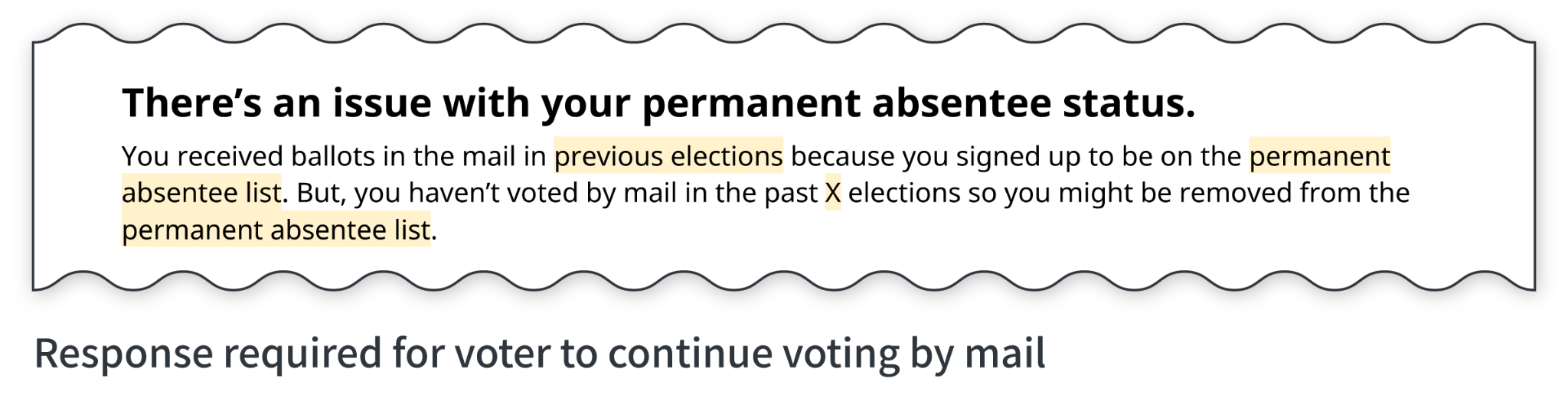
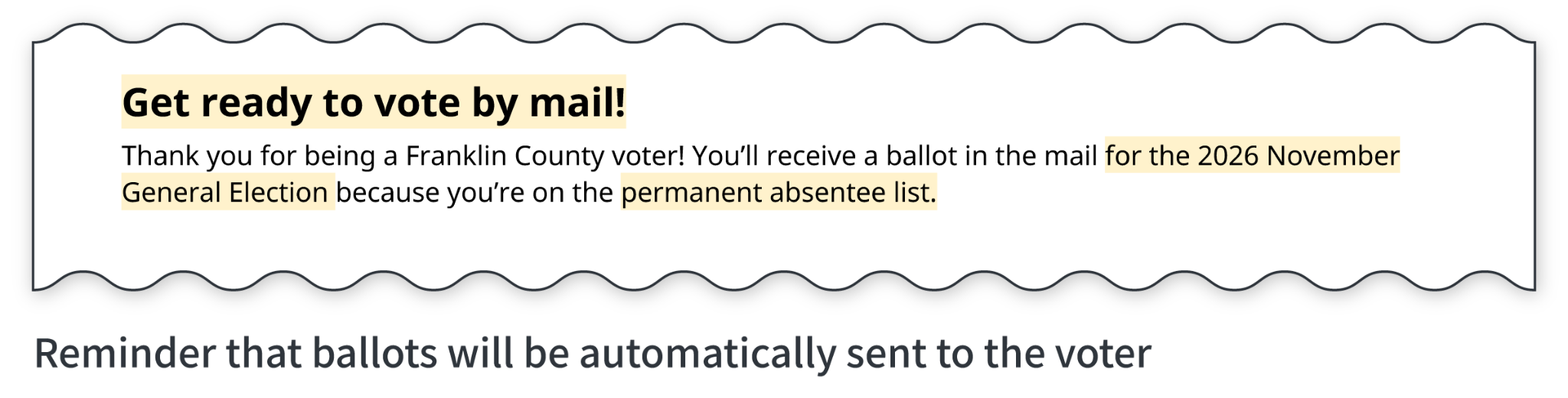
If the mailer is a reminder that the voter will continue to receive ballots, the mailer must answer the question: what happens if the voter ignores it? In this case, nothing happens if they doesn’t respond. So, the tone of these mailers can be more relaxed and informative. The call to action can focus on how to keep voter registration information up-to-date.
The mailer may also include how to opt out of automatically receiving a vote by mail ballot. Because the signature is only necessary to be removed from the list, use a simpler signature area so voters don’t accidentally remove themselves.
- Example: Get ready to vote by mail! Make sure your information is up-to-date.
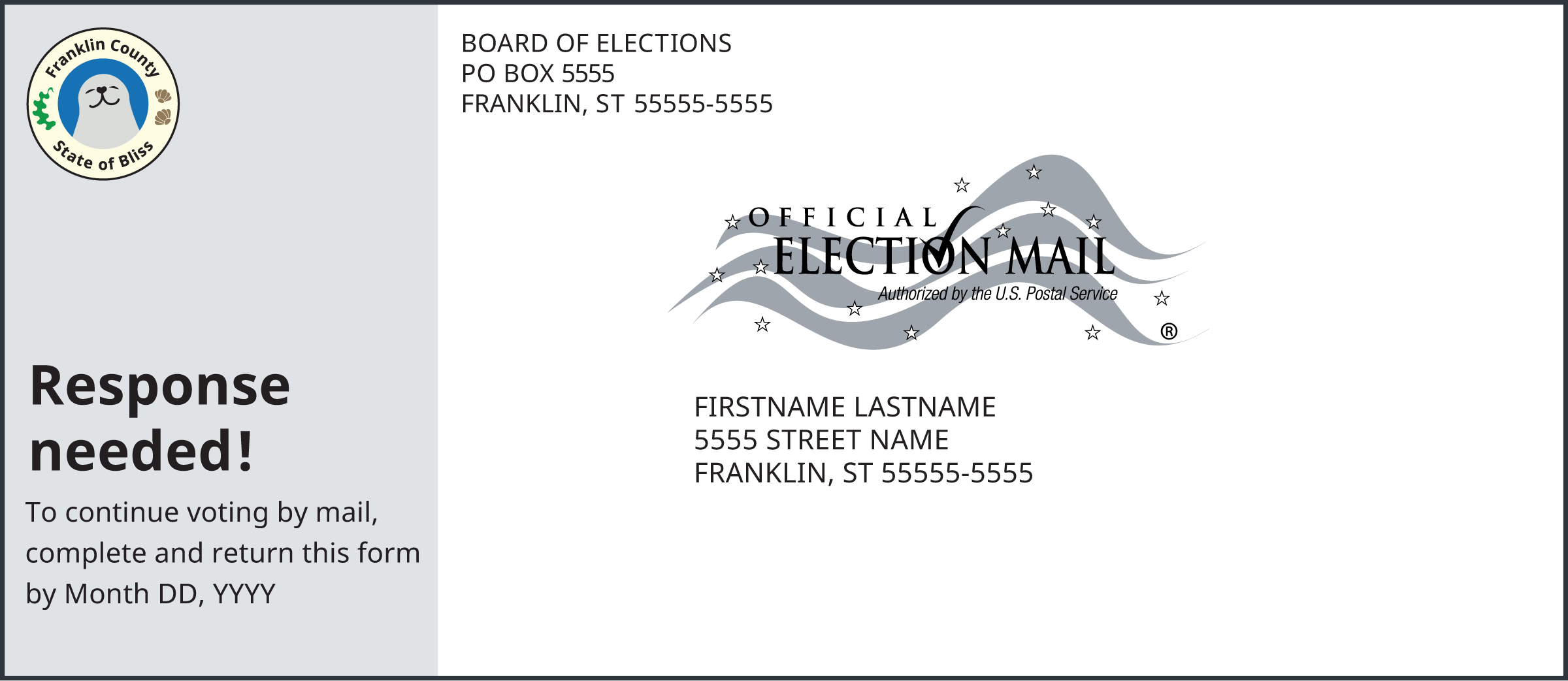
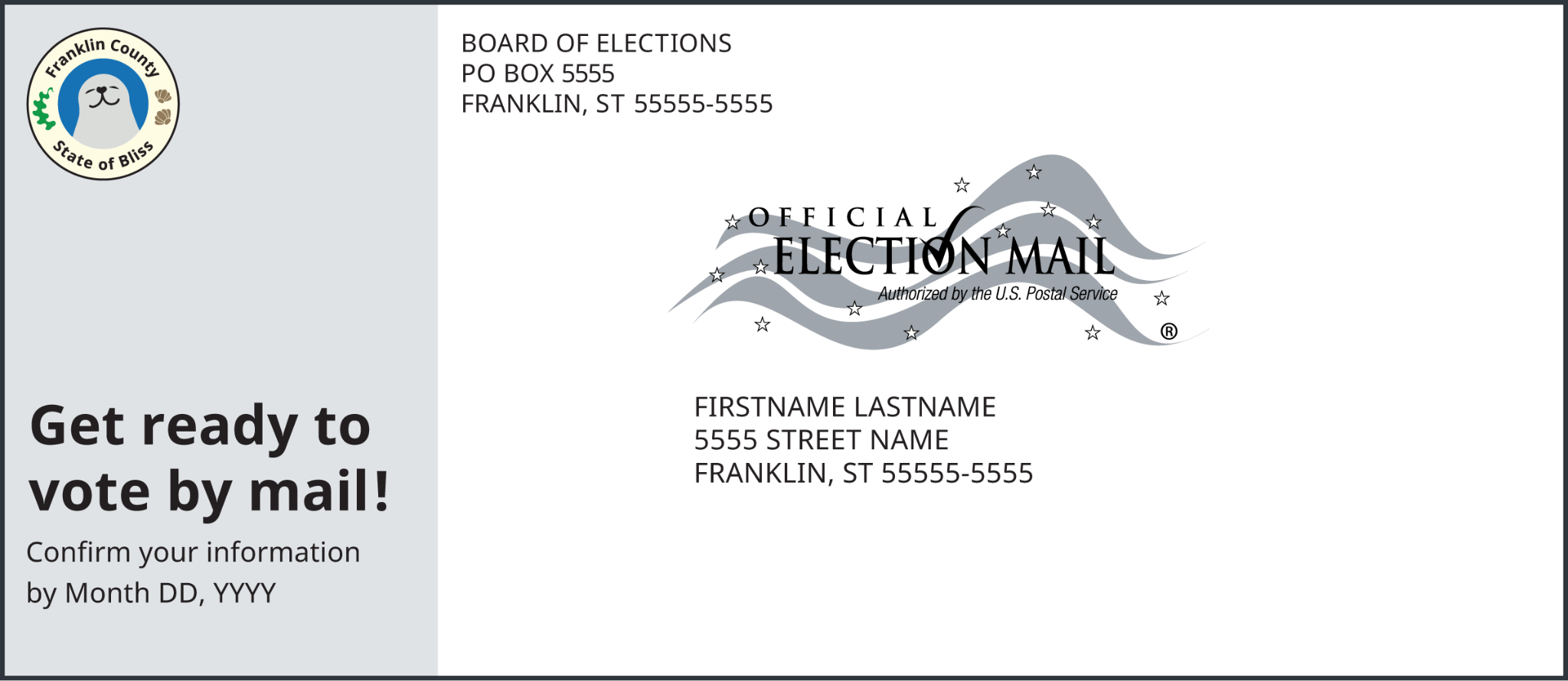
Use the envelope to preview what’s inside
Consider including a “teaser” message on the outside of the envelope. In most cases, you can repeat the main points of the mailer inside.
Use our envelope templates to get started.
For urgent mailers that require a voter’s response, use language that clearly describes the problem and explains how to fix it.
For reminder mailers, focus the message on providing information to the voter and collecting updates if any of their information has changed.
Make it easy for the voter to reply
If your mailer requires the voter’s response, don’t add anything that distracts the voter from responding. For example, don’t make the voter enter their name and address if it is already at the top of the notice.
To confirm that they still want to vote by mail, how much information does your office really need to take action?
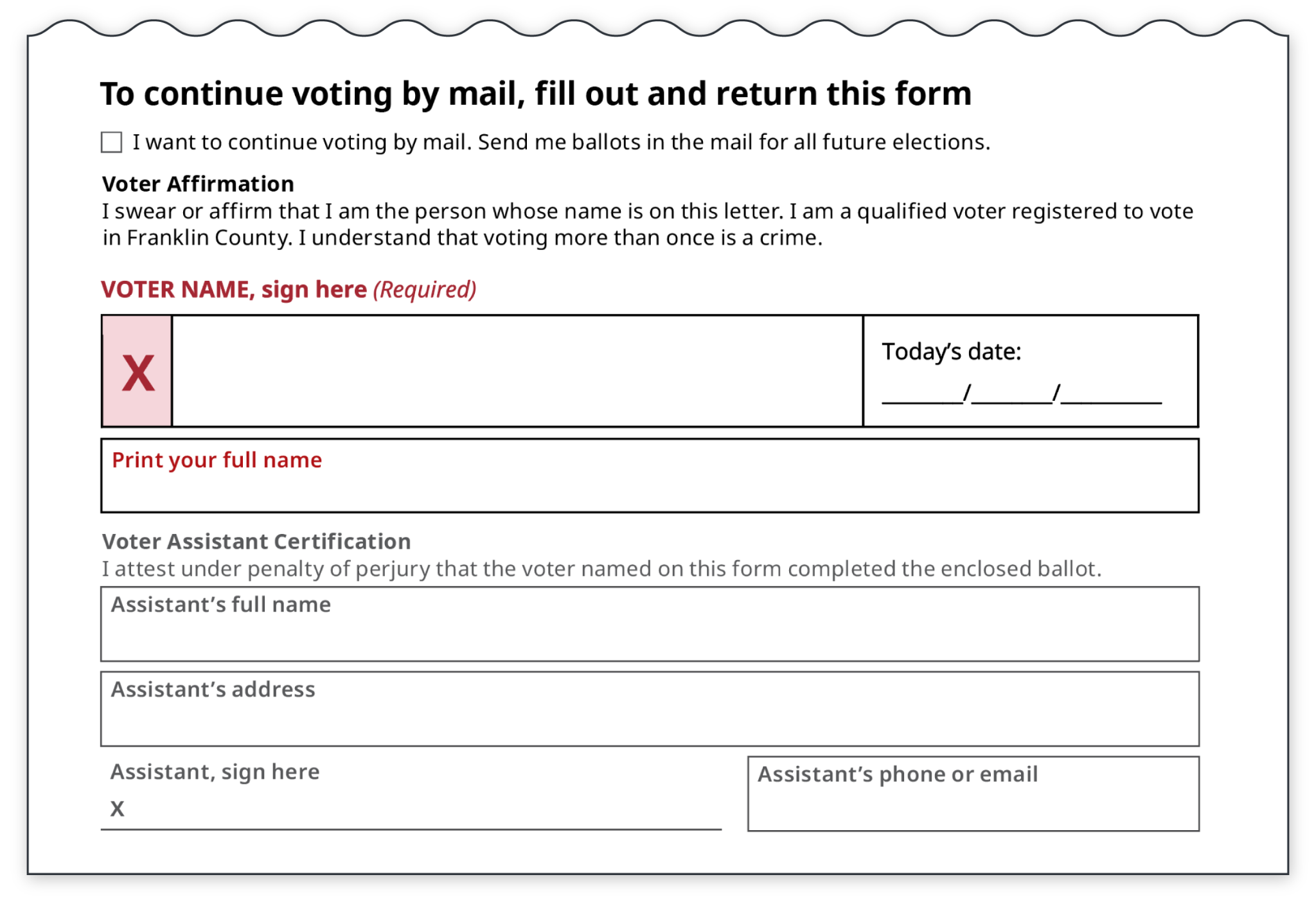
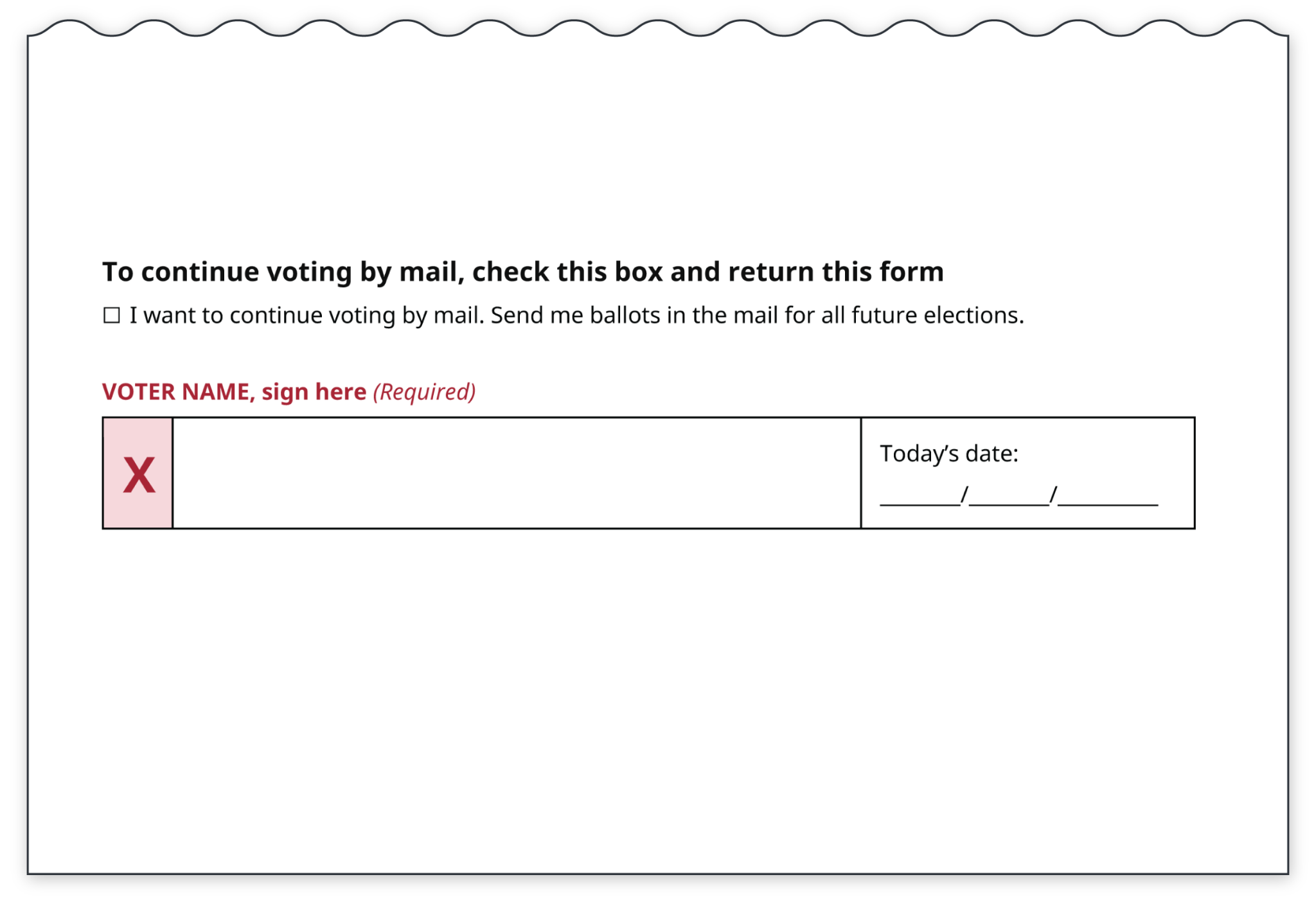
If you require a new application, consider how much information you need to collect from the voter. You might already have that information in your database. Do you need to ask for it again if a single checkbox and signature, and an opportunity to update their mailing address might be all that is required, like in the example below.
Tell us what you think
This year, we’re working to share tools that you can use immediately to make more effective voter-facing materials.
Need help picking the template that works best for you?
Email us!
We’re building this toolkit in the open and want your input:
- Do you have feedback on this template?
- Can we help you problem-solve how to design for your permanent vote by mail process?
- Do you have data on how many people successfully use your existing cure process? What have you seen work well or not work well?
We’d love to hear from you. Email us at hello@civicdesign.org

© 2025 Center for Civic Design