


Poll worker training assisting voters with disabilities
Poll worker training assisting voters with disabilities
Accessible voting systems are essential for enabling voters with disabilities to vote privately and independently. The Help America Vote Act of 2002 (HAVA) requires that each polling place have a voting system that is “accessible for individuals with disabilities, including nonvisual accessibility for the blind and visually impaired,” and that it must provide “the same opportunity for access and participation (including privacy and independence) as for other voters.”
However, voters with disabilities continue to experience barriers at the polling place. A 2021 EAC survey found that while 10 percent of voters without disabilities experienced difficulties voting in person in 2020, 18 percent of voters with disabilities experienced difficulties. NIST Special Publication 1273 identifies inadequate training of poll workers as a key barrier, noting that “voters with disabilities are delayed in using accessible voting machines or are unable to use them at all when poll workers are not trained to operate accessible voting machines.”
This training slide presentation and accompanying guide were developed to help election officials improve their training materials and practices for poll workers who assist voters with disabilities using accessible voting systems. The training ensures that poll workers know the legal rules for disability voting rights in the polling place and includes guidance for helping voters while preserving their independence and privacy.
The training is broken into five sections:
- Disability rights during voting: Introduction to disability rights in the voting process
- Accessible voting systems: Overview of accessible voting systems and their features
- Assisting voters with disabilities: Best practices for providing assistance
- How to assist voters throughout the voting process: Step-by-step guidance from check-in through ballot casting
- Summary and resources: Key takeaways and reference materials
To support effective implementation, this guide also includes best practices such as incorporating interactive demonstrations, creating Election Day job aids, encouraging poll workers to use the accessible voting system when they vote, and connecting with the local disability community.
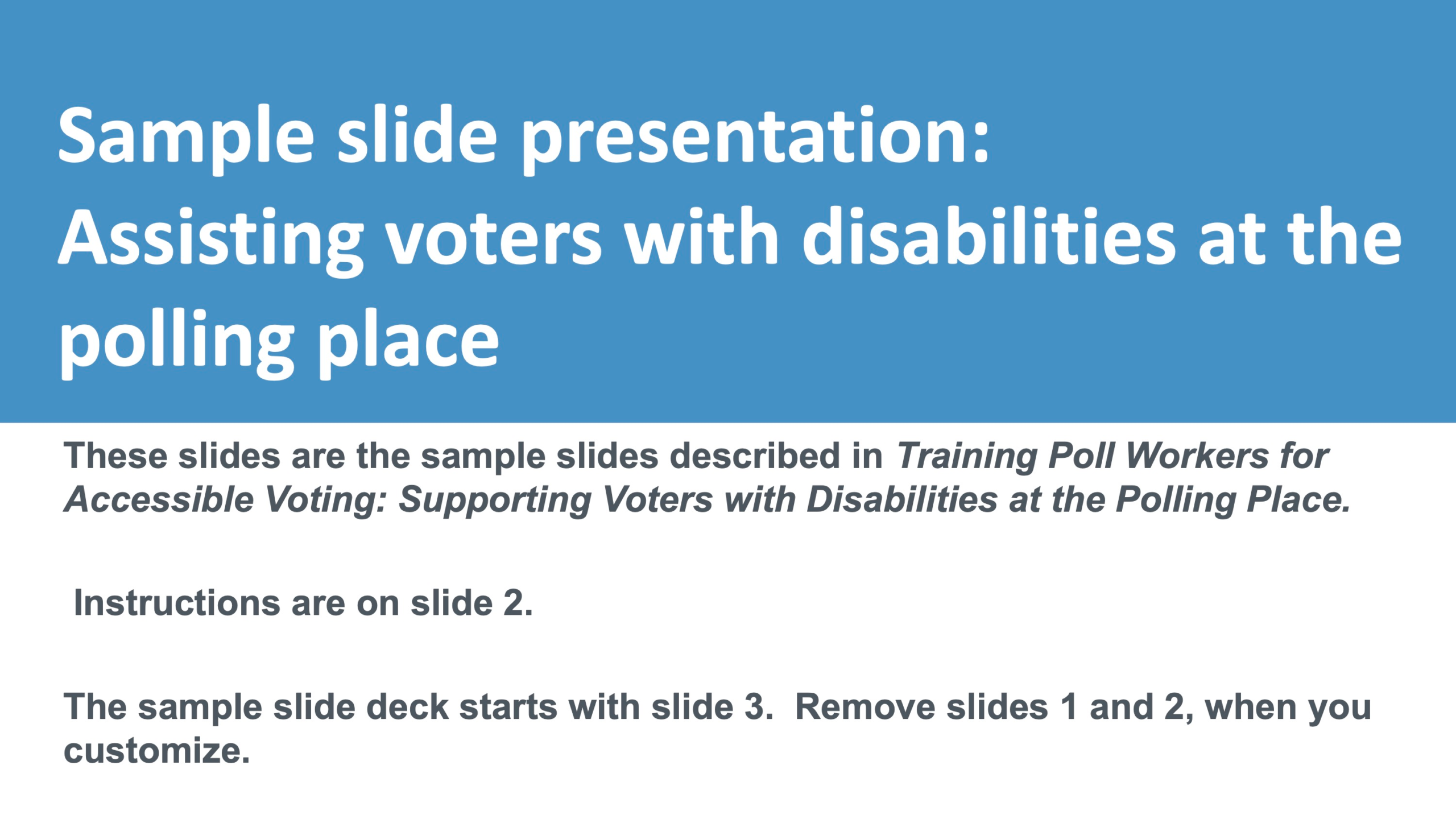
Sample training slide presentation
The customizable training slide presentation covers all aspects of assisting voters with disabilities at the polling place, from understanding disability rights through the complete voting process.
What it includes:
- Ready-to-use presentation with speaker notes.
- Customizable sections for your jurisdiction’s specific rules, procedures, and voting systems
- Scripts for offering orientations to voters about voting system features
How to use it:
- Download the presentation and customize highlighted sections for your jurisdiction
- Insert information about your specific accessible voting system and its features
- Add your jurisdiction’s procedures, forms, and chain of command
- Incorporate into existing poll worker training programs
- Use alongside interactive demonstrations and hands-on activities
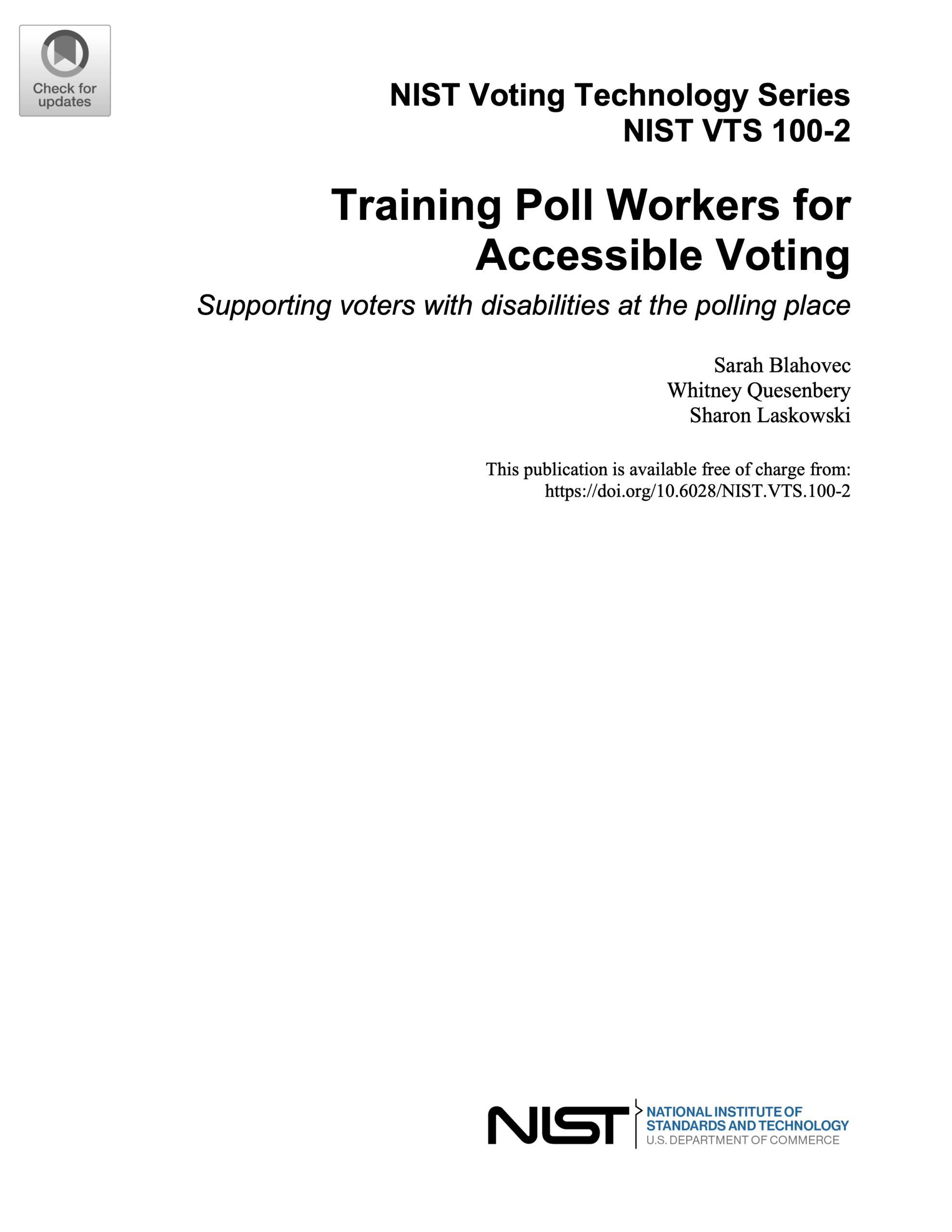
The planning and facilitation guide
The planning and facilitation guide provides detailed recommendations for implementing effective poll worker training on accessible voting.
What it includes:
- Overview of each training section and customization guidance
- Best practices for memorable, effective training delivery
- Recommendations for interactive demonstrations and activities
- Guidance on creating Election Day job aids
- Resources for connecting with the disability community

© 2025 Center for Civic Design