


What we’ve learned about designing for new voting methods
What we’ve learned about designing for new voting methods
Most US elections go to the candidate with the most votes.
Recently, more places are trying new voting methods:
- Ranked choice voting
- Proportional representation
- Cumulative voting
These new ways of voting bring promise of a stronger democracy, but also require new and sometimes unfamiliar ballot designs.
From the beginning, we have been interested in how voters react to ballot designs for novel voting methods. This started with explaining Top Two primaries and best practices for ranked choice voting design to help ensure that voters understand how they can use their ballots to have their voice heard. For the last year, we have looked forward, exploring designs for proportional voting and other proposals.
It is still early in the process, but we took a moment to look at all of our projects and share some of our takeaways from all of them.
If we are going to give voters new ways to share their voice, we need to know how to explain how the new methods work and how to mark their ballot to express their opinions accurately.
Voter education should focus on changes to mental models
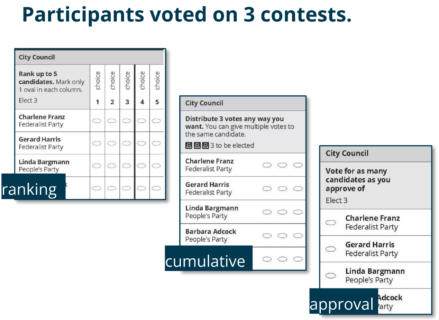
Current mental models for winner-take-all elections can conflict with how new voting methods work. In our research, participants were enthusiastic about ballots that gave them more freedom in how to choose candidates.
- In ballot tests, participants expected to mark the same number of selections as the number to be elected. Both RCV and approval allow more marks, although ranking was easier to explain.
- For some, voting for just one candidate felt more efficient and legitimate. They thought it made them consider their vote more carefully.
- Ranking and cumulative voting enhanced voter intent. They made participants feel they could communicate more nuanced choices.
Learning how to use a new voting method is a process
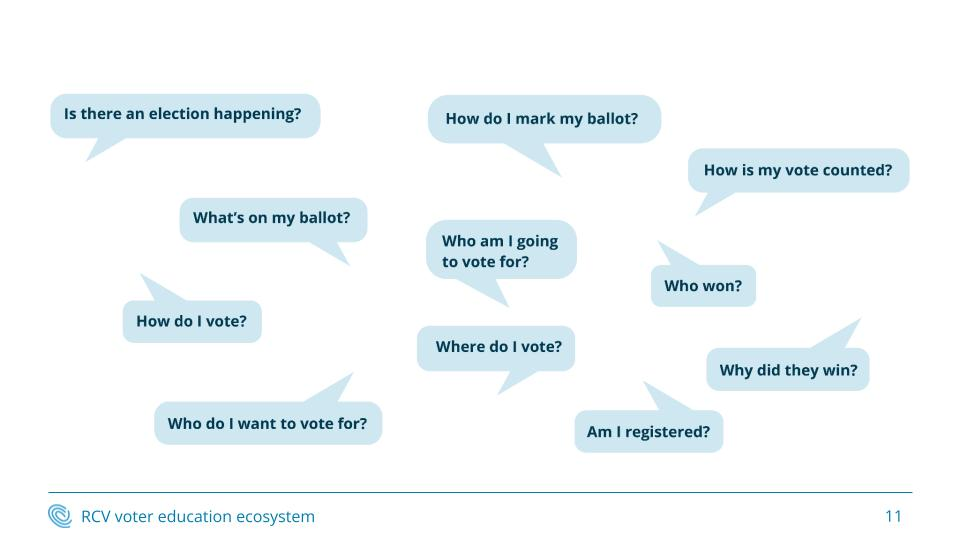
When learning about a new voting method, voters’ first concern is how they should mark their ballot to match their opinions about who should be elected. Broad interest in the details of counting often came after the election in our research.
Watch our webinar on how voters learn new voting methods
- Instruction and repeated exposure is important. When the City Council in St. Louis Park, Minnesota, adopted ranked choice voting (RCV) for city elections, they decided that voter education would include at least one thing about ranked-choice voting every month. Their goal was that when people come into the polling place to vote, they would know about RCV and not be surprised.
Read our case study of the St. Louis Park voter education campaign
- Bites, snacks, and meals helped voters learn at their own pace. When we tested voter education before the first RCV election in New York City, it took voters reading several different explanations to feel comfortable with the concepts and confident that they could mark their ballot accurately. They decided to use materials written as bites, snacks, and meals to move voters between short- and long-form voter education, without overwhelming them.
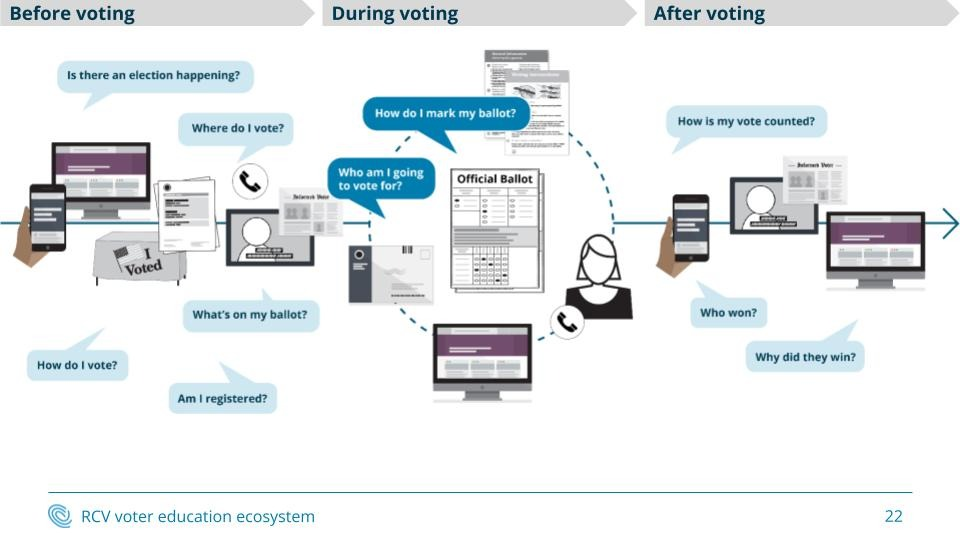
Photo: Illustration of timeline in NYC study showing quotes after each piece of voter ed.
Good instructions increase voter confidence
Ballots that do not feel familiar raise concerns about legitimacy, uninformed voters, and accuracy in counting. Although opinions varied, when presented with a ballot offering a new voting method, participants preferred more information to minimal instructions.
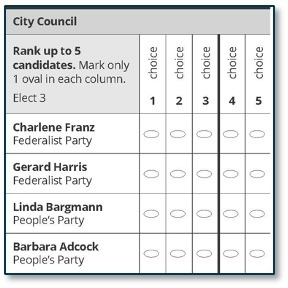
Figure with the usual 1-line fill-in-the-oval, our RCV instructions, and Port Chester cumulative.
In our research, illustrations were also important in translating voting concepts into voter actions. However, illustrations or other design elements alone were also not sufficient.
- Illustrations for ranked choice voting need to show what marks are correct, and what will be an overvote or other errors like skipping ranks (based on local counting rules).
- Any design with numbers or other writing inside the marking target caused confusion.
- Visual examples that matched intent to ballot mechanics were important in helping voters mark their ballot in cumulative voting.
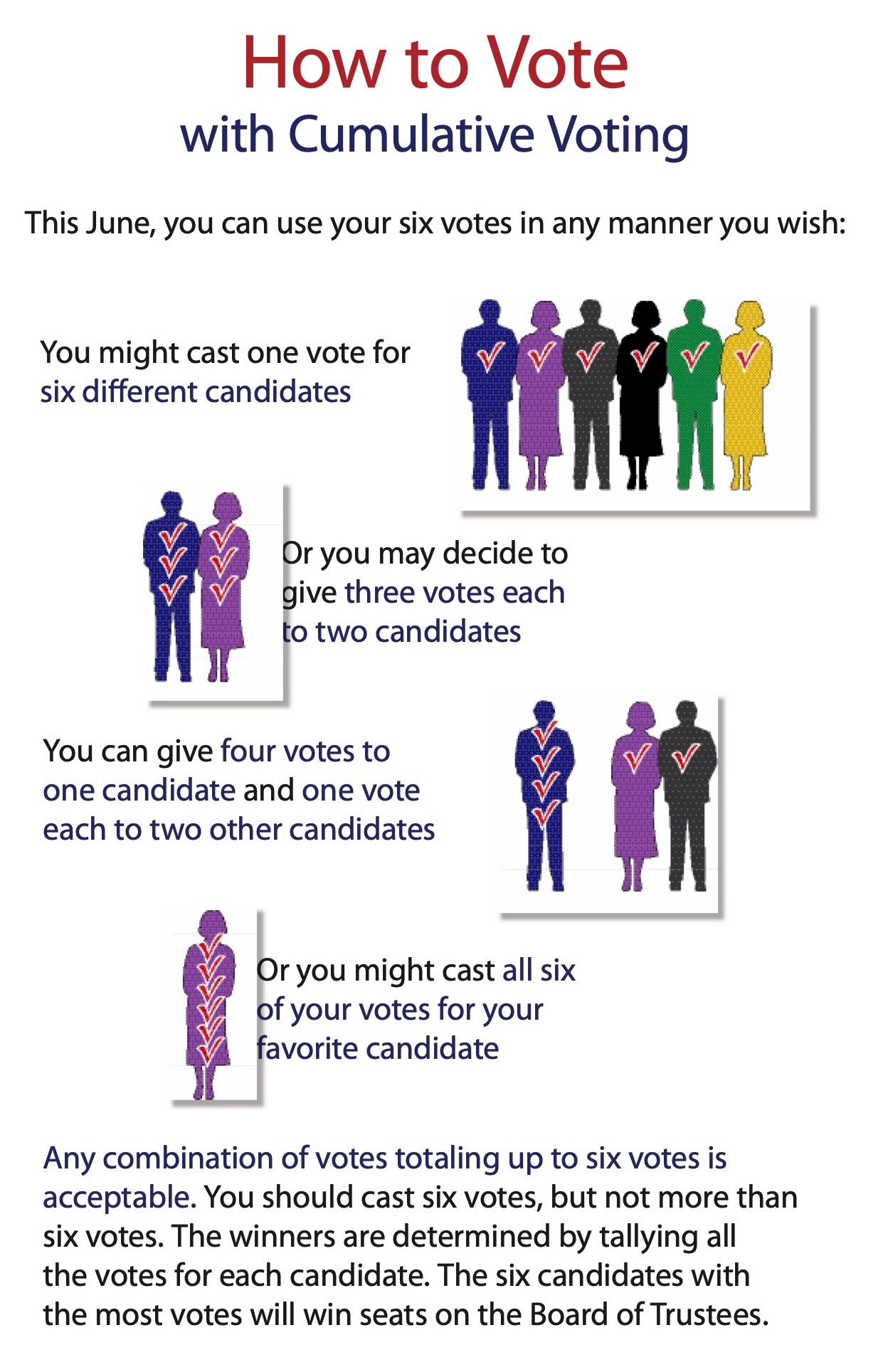
Image: instructions for how to mark cumulative from Port Chester.
More reading links
- Ranked choice voting: Best practices for ballots, voter education, and results
- Voting methods: Learn more about our research on proportional representation and other new ways of voting

© 2025 Center for Civic Design